Understanding Paid Search Management
Paid search management is a structured approach to running pay-per-click (PPC) campaigns effectively. It involves selecting the right keywords, optimising ad copy, managing budgets, and continuously analysing performance to maximise return on investment. For businesses looking to improve their online visibility, working with a PPC agency in Bristol can provide expert insights and tailored strategies to drive measurable results. Unlike organic search strategies that take time to yield results, paid search management allows businesses to appear at the top of search engine results almost instantly, making it an essential tool for growth.
What is PPC and How Does It Work?
Pay-per-click (PPC) is a digital advertising model where businesses pay for each click on their ads. The most common form of PPC is search engine advertising, where ads appear above or alongside organic search results when users search for specific terms.
PPC platforms, such as Google Ads and Microsoft Advertising (formerly Bing Ads), allow advertisers to bid on keywords relevant to their business. The cost per click (CPC) is determined by several factors, including competition, quality score, and relevance of the ad to the search query.
Key Elements of Effective Paid Search Management
Managing a PPC campaign requires careful planning and execution. Some essential aspects include:
1. Keyword Research and Selection
Choosing the right keywords ensures that ads appear for searches relevant to your business. This involves:
- Identifying high-intent keywords that align with user search behaviour
- Analysing search volume, competition, and cost-per-click
- Using negative keywords to exclude irrelevant searches and reduce wasted ad spend
2. Ad Copy and Landing Page Optimisation
A well-crafted ad encourages clicks, but the landing page experience determines whether those clicks convert into meaningful actions. Effective paid search management includes:
- Writing clear, compelling ad copy that matches user intent
- Ensuring landing pages provide a seamless user experience
- A/B testing different variations of headlines, descriptions, and call-to-action elements
3. Budget and Bid Strategy
PPC advertising operates on an auction system, where advertisers set bids for keywords. A bid strategy should align with business goals:
- Manual bidding: Provides full control over bids but requires constant monitoring
- Automated bidding: Uses machine learning to optimise bids for conversions
- Target CPA (Cost Per Acquisition) or ROAS (Return on Ad Spend): Helps businesses control their ad spend efficiency
4. Performance Tracking and Data Analysis
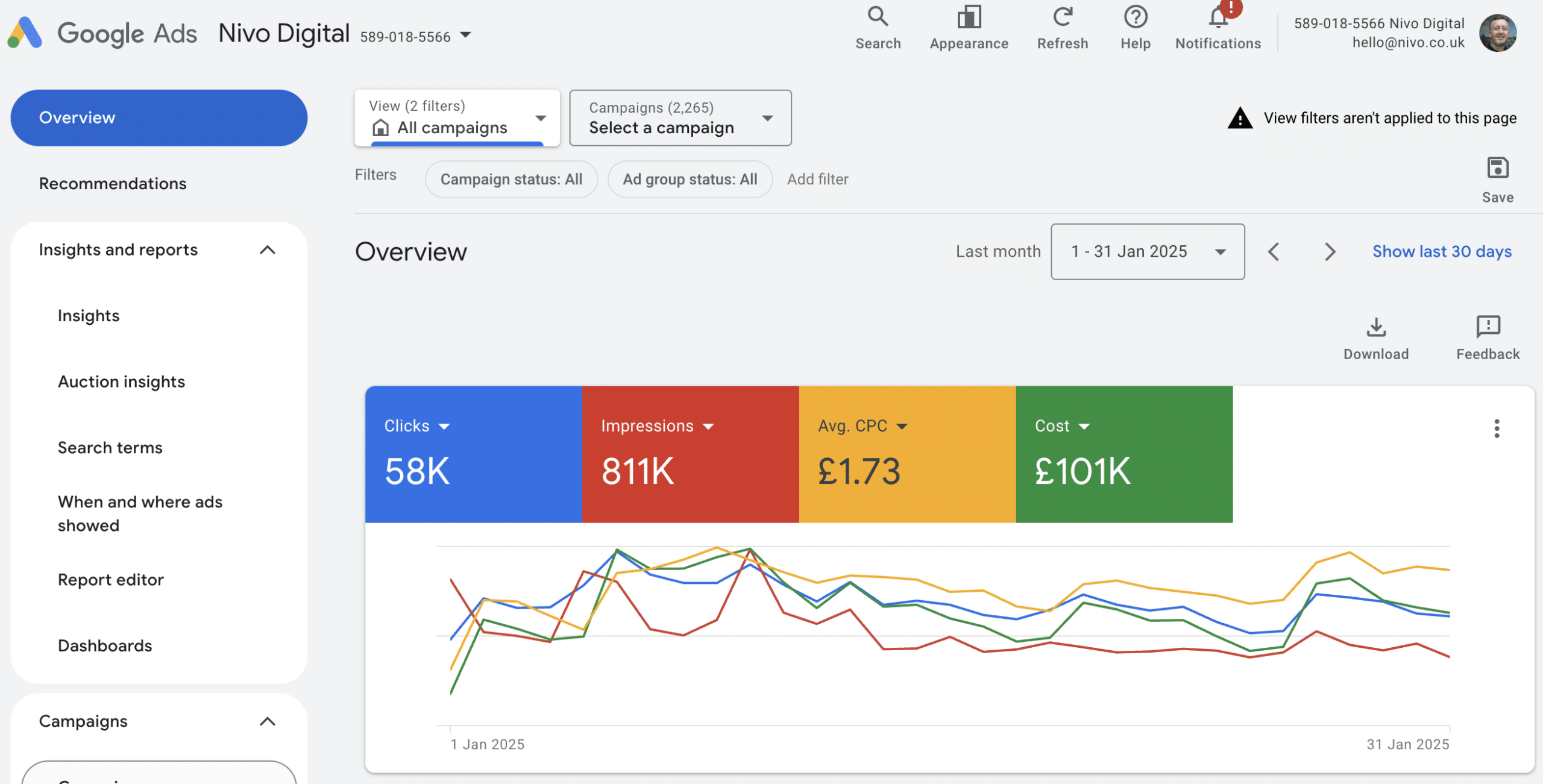
One of the biggest advantages of paid search management is the ability to measure performance in real time. Key metrics to track include:
- Click-through rate (CTR)
- Conversion rate
- Cost per conversion
- Quality Score (Google’s rating of ad relevance and landing page experience)
Using Google Analytics and PPC reporting tools, advertisers can identify trends, adjust targeting, and refine strategies for better results.
The Role of AI in Google Ads Management (2025 and Beyond)
Artificial Intelligence (AI) is playing an increasingly significant role in paid search management, particularly in Google Ads automation. In 2025, AI-driven tools are streamlining campaign management by analysing vast amounts of data in real time, optimising bids, and predicting audience behaviour more accurately than ever before. Features like Smart Bidding, Performance Max campaigns, and automated ad creative generation allow advertisers to improve efficiency while reducing manual workload. AI is also enhancing keyword intent analysis, helping businesses identify new opportunities with minimal guesswork. While AI-powered automation is improving campaign performance, human expertise remains essential for strategy development, creative messaging, and data interpretation to ensure optimal results.
Types of PPC Ads in Paid Search Management
Different ad formats can be used depending on business goals:
1. Search Ads
These text-based ads appear on search engine results pages (SERPs) when users search for specific keywords. They are highly effective for capturing intent-driven traffic.
2. Display Ads
Display advertising uses banner ads, videos, and images across Google’s Display Network and other platforms to increase brand awareness.
3. Remarketing Ads
These ads re-engage visitors who have previously interacted with a website but did not complete an action, such as making a purchase or filling out a contact form.
4. Shopping Ads
For eCommerce businesses, Google Shopping Ads display product images, prices, and store information directly in search results.
The Role of Paid Search Management in a Digital Strategy
Paid search is most effective when integrated into a broader digital marketing strategy. When combined with SEO, content marketing, and social media advertising, PPC can:
- Provide immediate traffic while SEO efforts build long-term organic visibility
- Help test which keywords and messaging drive the most conversions before investing in SEO
- Support remarketing efforts to re-engage past visitors
Best Practices for Managing PPC Campaigns
- Regularly review and refine keyword targeting to ensure relevance and cost-efficiency
- Monitor ad performance metrics to optimise campaigns based on data insights
- Test different ad variations to improve click-through and conversion rates
- Allocate budgets effectively, increasing spend on high-performing campaigns while minimising waste
Conclusion
Paid search management is a powerful way for businesses to increase visibility, drive targeted traffic, and generate conversions in a measurable way. A well-structured PPC strategy involves thorough keyword research, ad optimisation, budget management, and ongoing performance tracking to achieve the best results.
For those new to PPC or looking to improve existing campaigns, a structured approach to paid search management ensures that advertising budgets are spent effectively while maximising return on investment.